Reasons for and Solutions to a Frozen Bank Account
Reasons for and Solutions to a Frozen Bank Account
In today's digital age, possessing a bank account is absolutely essential; it has become a vital part of our daily lives. The majority of financial transactions take place through bank accounts, a method that is both easy and convenient. However, people's bank accounts occasionally get frozen (or blocked) without warning, thereby halting the ability to withdraw funds, conduct transactions, or make online payments. This situation can be extremely distressing. To avoid such complications, it is crucial for everyone to be well-informed about this issue.
Therefore, in this blog post by lawhelp4you, we will explore why bank accounts get frozen, identify the primary reasons behind it, and outline the complete procedure for unfreezing an account.
📌 What is a Bank Account Freeze?
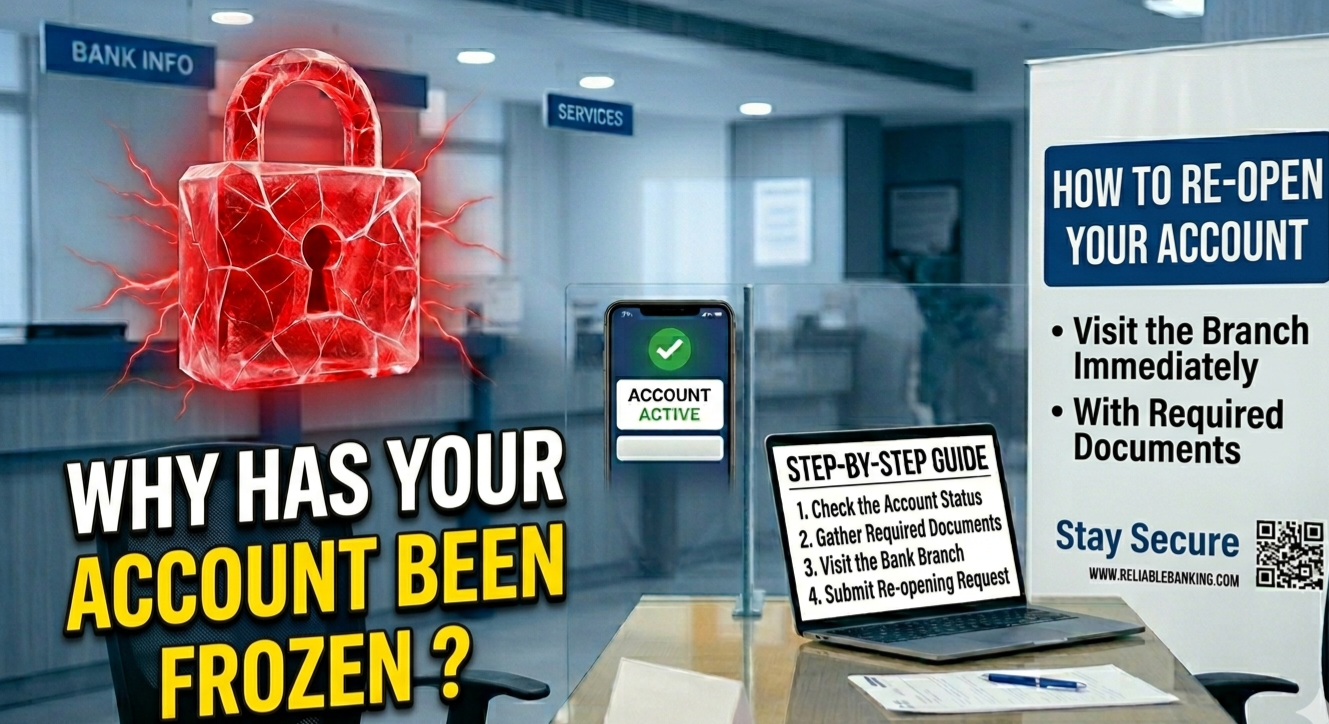
When a bank temporarily suspends transactions on a specific account, the account is said to be "frozen." During this period, the funds remain present in your account, but you are unable to withdraw or transfer them. The process of freezing a bank account is typically initiated for reasons such as protection against fraud, legal mandates, or non-compliance with regulatory norms.
⚠️ The primary reasons for a bank account being frozen are as follows:
🔴 1. Failure to Update KYC
In the majority of cases, the failure to update KYC (Know Your Customer) details is the primary reason for a bank account being frozen. According to RBI regulations, "Every account holder is required to update their KYC details once in every three years." To do this, information such as Aadhaar, PAN, or other relevant details must be updated with the bank. If a customer fails to do so, their account is automatically frozen. Once the updates are completed, the account is unfrozen.
🔴 2. Suspicious Transactions
The second primary reason for a bank account being frozen is the sudden occurrence of large-value transactions—either deposits or withdrawals—which the bank views as suspicious. The frequent receipt or transfer of large sums of money to or from unknown accounts raises suspicion. If the bank detects unauthorized transactions or fraudulent activity within an account, it will immediately freeze the account as a security measure.
🔴 3. Upon Court Orders
In legal matters, an order to freeze a bank account issued by the police or the courts during an investigation is a significant step. Such orders are primarily issued in cases involving money laundering, fraud, corruption, or other financial crimes. When the police are investigating suspicious transactions pursuant to an FIR, or when a court finds evidence that funds held in an account have been utilized in criminal activity, the bank will immediately freeze the account upon receiving a written order from the court. This means that no withdrawals, transfers, or transactions can be initiated from the account; however, deposits may still be accepted. This freeze is temporary in nature. In such situations, the bank account is unfrozen only after a subsequent order is issued by the court.
🔴 4. Income Tax or Government Investigations
In cases involving tax evasion or suspected illicit income, the Income Tax Department has the authority to freeze a bank account. In this scenario as well, the account will be unfrozen only after an order is issued by the Income Tax Department or a court of law.
🔴 5. Loan or EMI Default
In the event of a loan or EMI default—specifically if a borrower fails to repay their scheduled installments (EMIs) to the bank on time—the bank initiates a recovery process and may place a hold (freeze or block) on the account. This action is typically taken when there is a delay of more than 90 days in repaying the loan. In such instances, the bank's initial step involves... It issues a notice, subsequently halts automatic debits from the account, accrues interest and penalties, and finally freezes the account completely to prevent any withdrawals. This process provides the borrower with an opportunity to reach a settlement; otherwise, asset seizure or legal action may ensue.
🔴 6. Submission of False Documents or Fraud
An account may also be frozen due to the submission of fraudulent documents or the use of a false identity during the account opening process or while completing KYC (Know Your Customer) formalities. In such instances, the account holder is granted an opportunity to undergo re-verification.
🔴 7. Account Maintenance Errors
Accounts are sometimes frozen due to errors in account maintenance; for instance, if an account remains dormant—meaning no transactions are recorded for a continuous period of six months—the system automatically freezes it. This is an automated, computerized process. Similarly, maintaining a negative balance or failing to submit necessary documentation can also result in an account being frozen.
🪜 How to Unfreeze a Bank Account?
🔹 1. First, visit or contact your bank branch to determine the specific reason why your account has been frozen.
🔹 2. Update your KYC (Know Your Customer) details by submitting your Aadhaar, PAN, and proof of address; ensure you provide the bank with accurate and valid documents.
🔹 3. If the account was frozen due to a legal matter, it is mandatory to respond to the official notice you received.
🔹 4. If your bank account has been frozen in connection with a legal case, you must obtain a release order from the court and submit it to the bank.
🔹 5. If the account freeze stems from an Income Tax-related issue, resolve the problem by obtaining a clarification or clearance from the Tax Department.
🔹 6. Ensure you conduct transactions in your bank account periodically to prevent it from being automatically frozen by the bank's computerized system due to inactivity.
How long does it take to unfreeze a bank account?
KYC Issue → 1–3 days
Bank Internal Issue → 3–7 days
Legal Case → 1 month or more
Tax Case → Varies depending on the investigation
⚠️ Important Points
✔ A bank cannot keep an account frozen for an extended period without a valid reason.
✔ The account is reactivated once the correct supporting documents are submitted.
✔ Instead of panicking, contact your bank immediately.
A frozen bank account is a serious issue; however, with timely action, 90% of cases see the account unfrozen within a few days—provided you take the right steps at the right time. The most crucial aspects are identifying the exact reason for the freeze and submitting the appropriate documentation.
This Blog for information only. If you found this information helpful, please share it widely so that others can avoid facing similar banking-related difficulties.
Author: lawhelp4you.com
This information has been compiled from various sources.